Views: 0 Author: Site Editor Publish Time: 2026-01-27 Origin: Site
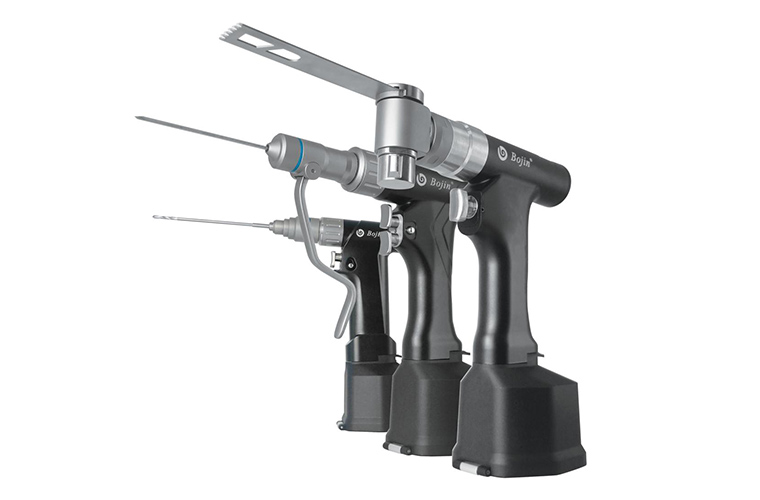
In orthopedic surgery, accuracy and control are pivotal for successful bone fixation and implant placement—making the orthopedic electric drill an indispensable instrument. Replacing labor-intensive manual drills, this powered tool delivers consistent rotational force, enabling precise drilling across all bone types, from dense cortical bone to porous cancellous bone, while minimizing trauma to surrounding soft tissues. Its versatility and technological advancements have solidified its role in core orthopedic procedures, including fracture repair, joint replacement, and spinal surgery.
At its core, the drill features a motor-driven design that converts electrical energy into controlled rotational motion. Unlike manual drills, which are prone to creating uneven holes or causing bone splintering, electric models offer adjustable speed and torque tailored to varying bone densities. A key safety feature, torque control, automatically halts the drill when excessive resistance is encountered, preventing bone fractures and damage to nearby nerves or blood vessels.
Design refinements further boost the drill’s clinical utility, complementing its core performance. Ergonomic, lightweight handles with non-slip grips reduce surgeon fatigue during prolonged procedures, while a secure chuck system firmly secures drill bits, burs, or reamers to prevent slippage—essential for procedures requiring incremental precision. Modern drills are available in corded or battery-powered variants, the latter ideal for emergency or mobile settings. Crafted from tungsten carbide or medical-grade stainless steel, drill bits feature fluted designs to channel bone debris away from the surgical site, ensuring clear visibility and accuracy—advantages that prove invaluable in complex procedures like total hip arthroplasty.
Orthopedic electric drills find widespread use across orthopedic subspecialties, with particularly critical application in hip replacement surgery—one of the most commonly performed joint procedures globally. During total hip arthroplasty, the drill plays an irreplaceable role in preparing the femoral canal for stem implant placement, a process demanding meticulous precision to ensure long-term implant stability and functionality. Leveraging the tool’s adjustable settings and secure chuck system, surgeons first use a small-diameter, sharp-tipped pilot drill bit (typically 3.2mm to 4.5mm), guided along the anatomical axis of the femoral intramedullary canal to establish an initial pathway. This pilot hole is drilled under fluoroscopic guidance to avoid varus or valgus deviation, which could compromise implant alignment and hinder post-surgical mobility.
After creating the pilot hole, sequential reamers—attached to the drill’s chuck and sized incrementally (usually in 0.5mm to 1mm steps)—are used to enlarge the canal to the target dimensions. Here, the electric drill’s adjustable torque and speed settings are indispensable: low to moderate RPM (800–1,500) is maintained to prevent cortical bone overheating, a risk that can damage bone cells and weaken implant integration. Meanwhile, torque control mitigates excessive force, reducing the likelihood of femoral shaft fracture—especially in patients with osteoporosis. Each reamer pass is followed by tactile assessment and fluoroscopic confirmation, ensuring the canal is reshaped to match the tapering geometry of the femoral stem for an optimal fit.
Once the target diameter is reached, a broach—powered by the drill or manually guided, depending on bone density—is used to further refine the canal. This step removes residual cancellous bone and creates a press-fit surface for the femoral stem. The drill’s consistent rotational force ensures even advancement of the broach, preserving cortical bone integrity—a key factor in implant primary stability that directly influences patient recovery outcomes. Beyond hip surgery, this precision translates to other orthopedic procedures: the drill creates accurate holes for fixation screws and plates in fracture repair, shapes vertebrae for spinal fusion, and adapts to fragile growing bones in pediatric cases via low-torque settings, highlighting its versatile clinical value.
These clinical applications are supported by the drill’s robust safety and durability features, which adhere to strict global medical standards. All models meet rigorous medical criteria, with insulated housings to eliminate electrical hazards and compatibility with high-temperature sterilization for repeated use. Disposable drill bits prevent cross-contamination, while reusable components undergo thorough corrosion and strength testing to maintain consistent performance. Advanced drills also integrate with surgical navigation systems, providing real-time feedback on depth and position to enhance precision in procedures like femoral canal preparation.
As orthopedic technology advances, electric drills continue to evolve, incorporating innovations like AI-assisted torque adjustment and wireless performance tracking. By combining power, precision, and safety, these tools shorten surgical times, reduce complication rates, and accelerate patient recovery. The orthopedic electric drill stands as a prime example of how engineering innovation elevates the standard of musculoskeletal care.